

Best Vitamin C Moisturiser Australia: What to Look For
Last Updated: November 19, 2026
Quick Summary
The best vitamin C moisturiser in Australia combines a stable form of vitamin C with hydration, protective packaging and a formula you will use daily. EVVRÁ's Brightening Veil is a one-step option that pairs vitamin C with Kakadu plum, ferulic acid and green tea. Always finish your morning routine with a broad-spectrum SPF.
- A vitamin C moisturiser combines antioxidant support with hydration and barrier protection in one step.
- Check the specific vitamin C form named in the ingredient list, not just the marketing copy.
- Opaque, airtight packaging helps protect vitamin C from light and air.
- Apply your vitamin C moisturiser first, let it settle, then finish with SPF every morning.
- Patch test any new vitamin C product on a small area for several days before full use.
Table of Contents
- Why a Vitamin C Moisturiser Works Differently From a Serum
- What to Look for in a Vitamin C Moisturiser
- Comparing Vitamin C Formats: A Simple Table and Pros and Cons
- Kakadu Plum Skincare Benefits and Where Natural Vitamin C Fits
- How to Layer Vitamin C and SPF Each Morning
- A Simple Skincare Routine for Dull Skin, AM and PM
- Your Next Step: Patch Test, Then Choose Your Moisturiser
- Frequently Asked Questions
Why a Vitamin C Moisturiser Works Differently From a Serum
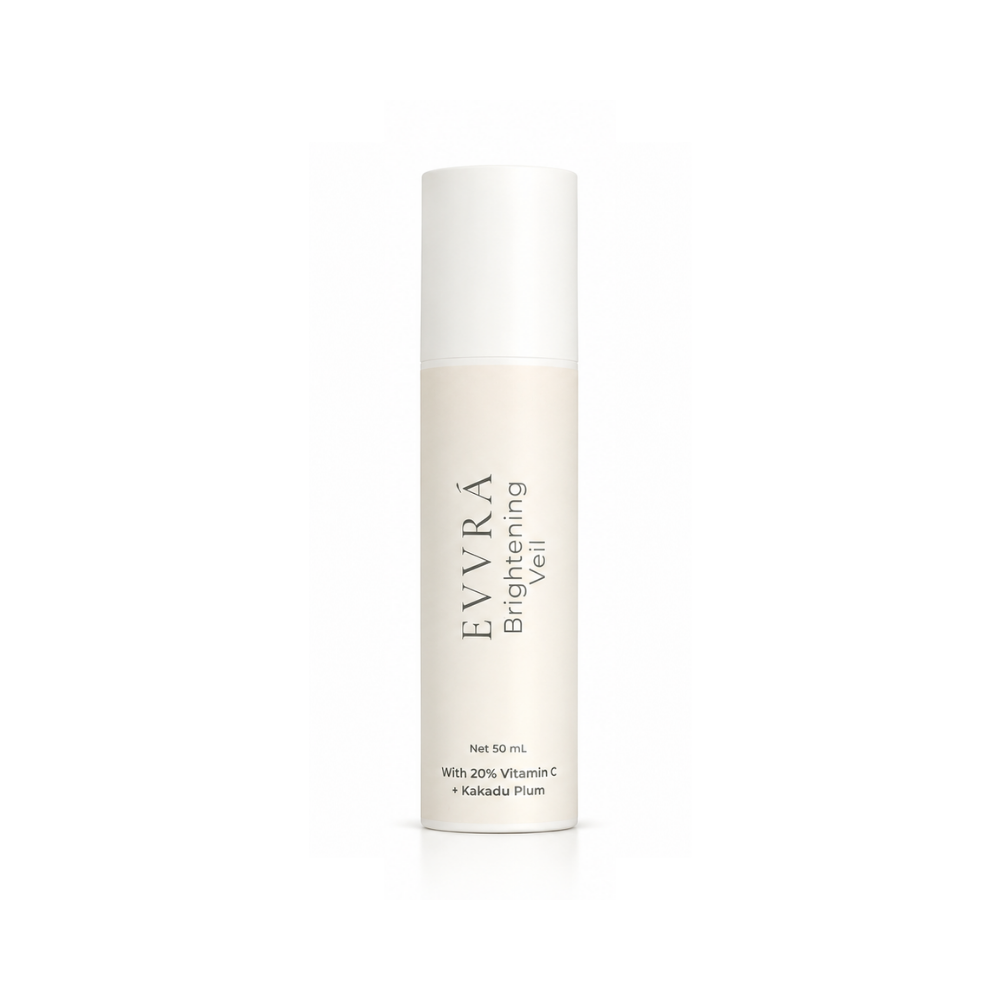
If you're searching for the best vitamin C moisturiser in Australia, the first thing to understand is that a moisturiser and a serum do different jobs. A serum is usually lighter, more concentrated and sits on the skin briefly before the next step. A vitamin C moisturiser combines that antioxidant support with the hydration and barrier protection you need to finish your routine each morning. EVVRÁ's Brightening Veil is designed as a single step for people with dull or tired-looking skin who want antioxidant support and hydration together.
Vitamin C is a widely studied antioxidant, and its role in skincare is usually described in terms of helping skin look brighter and more even over time. Moisturisers also help the skin barrier stay comfortable, which matters when your skin feels dry one week and more reactive the next.
What to Look for in a Vitamin C Moisturiser
Not every vitamin C product is built the same way, and two moisturisers can both say "vitamin C" on the front of the box while behaving very differently on your skin. Four factors matter most: the form of vitamin C, how well it stays stable, the packaging it comes in, and how the formula pairs with your daily SPF.
Vitamin C form: what the names on the label actually mean
Vitamin C in skincare comes in two broad families, and knowing which one a product uses can help you set realistic expectations.
Pure ascorbic acid is the most studied form. It is water-soluble and works best in a well-formulated, low-pH environment, which is why it can feel tingly on sensitive skin.
Derivatives are built to be more stable and gentler. Common examples include sodium ascorbyl phosphate, magnesium ascorbyl phosphate, ascorbyl glucoside and the oil-soluble ascorbyl tetraisopalmitate.
A practical label check: look for the specific form named in the ingredient list (not just "vitamin C" in the marketing copy), and look for supporting antioxidants such as ferulic acid or green tea, which are commonly included to help protect the formula. Our Brightening Veil pairs vitamin C with Kakadu plum, ferulic acid and green tea.
Stability, concentration and pH
Stability is about how well the vitamin C survives between manufacture and your bathroom shelf. Three things drive it: exposure to light and air, the pH of the formula, and whether the vitamin C is protected by other ingredients. Lower-pH formulas can be more likely to sting on reactive or compromised skin.
Concentration is often used as a headline number, but higher is not automatically better. If your skin is sensitive, a moderate formula you can use comfortably every day may suit you better than a stronger one you have to skip.
Packaging and why it matters
Light and air are the two main things that reduce the stability of vitamin C over time. Opaque, airtight packaging, a tube, or a pump that limits exposure to air, helps protect the formula between uses. A clear jar that you open daily exposes the product to light and oxygen every time, so it is more likely to lose effectiveness faster than a closed container. Check the packaging before you purchase.
Watch out: if a vitamin C cream has darkened significantly or smells sharp compared with when you bought it, it may have oxidised, so check the product before continuing to use it.
Pairing with daily SPF
A vitamin C moisturiser supports the look of brighter, more even skin, but it does not replace sun protection. In Australian conditions, where UV exposure is high for much of the year, a broad-spectrum SPF every morning is the single most useful step you can add alongside it. Apply your vitamin C moisturiser first, let it settle, then finish with SPF. Patch test any new vitamin C product on a small area for several days before using it across your face, and speak with your GP or a dermatologist if you have persistent or painful skin concerns.
Comparing Vitamin C Formats: A Simple Table and Pros and Cons
Most guides stop at listing formats. The more useful question is which format fits your skin, your routine and how much time you actually have in the morning. Use the table below as a starting point, then match it to the guidance underneath.
| Format | Typical texture | Best for | Watch for |
|---|---|---|---|
| Vitamin C serum | Light, fluid | Targeted layering under moisturiser; those who already have a moisturiser they love | Needs a separate moisturiser step; can feel tingly on sensitive skin |
| Vitamin C moisturiser | Cream or lotion | One-step morning routine with hydration; drier or more mature skin | Heavier texture on very oily skin |
| Vitamin C gel-cream | Gel-based, fast-absorbing | Combination or warm-weather skin; oily skin that resists rich creams | May feel less rich on dry skin |
Choosing by skin type
Dry or dehydrated skin usually does best with a vitamin C moisturiser, because the cream base delivers hydration and barrier support alongside the antioxidant.
Oily or combination skin often prefers a gel-cream or a lighter lotion. A rich vitamin C cream can feel occlusive in humidity, so a fast-absorbing format you will actually use daily beats a heavier one you avoid.
Sensitive or reactive skin should start with a derivative-based formula rather than pure ascorbic acid, applied every second or third day before building up. Patch test first, and introduce one new product at a time so you can tell what your skin is responding to.
Acne-prone skin benefits from non-comedogenic, lighter formats and a cautious approach, vitamin C itself is not a treatment for breakouts, and layering too many actives at once can aggravate irritation.
Moisturiser versus serum: a simple decision framework
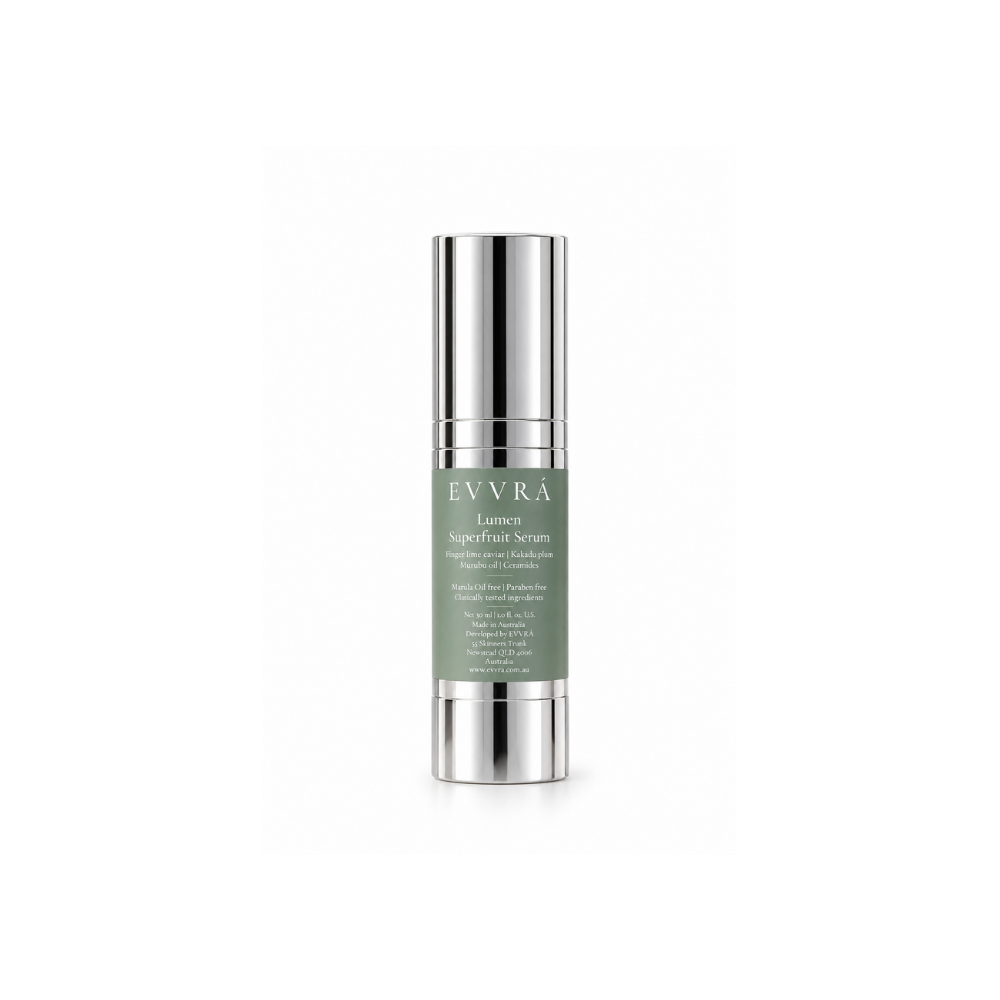
Choose a vitamin C moisturiser if you want to simplify your routine, prefer a cream texture, or your skin needs hydration and brightening in one step. Choose a serum if you already have a moisturiser you rely on, want to layer vitamin C with other targeted treatments, or prefer a lighter feel under SPF. If you are unsure, a moisturiser is usually the easier place to start because it removes a step rather than adding one. Our Brightening Veil is built as that one-step option, while a serum such as Superfruit Serum suits readers who prefer to layer.
Realistic expectations and timelines
Vitamin C is a cosmetic ingredient, and results vary from person to person. Most people notice hydration and a smoother feel within days, while changes to the look of brightness and evenness tend to be gradual and build with consistent daily use over weeks rather than overnight. Consistency and daily SPF matter more than chasing a higher concentration. The Tone Refining Serum contains niacinamide and tranexamic acid, for readers who want to layer tone-focused ingredients.
Watch out: stacking several actives at once can lead to irritation, so introduce one product at a time and patch test each one.
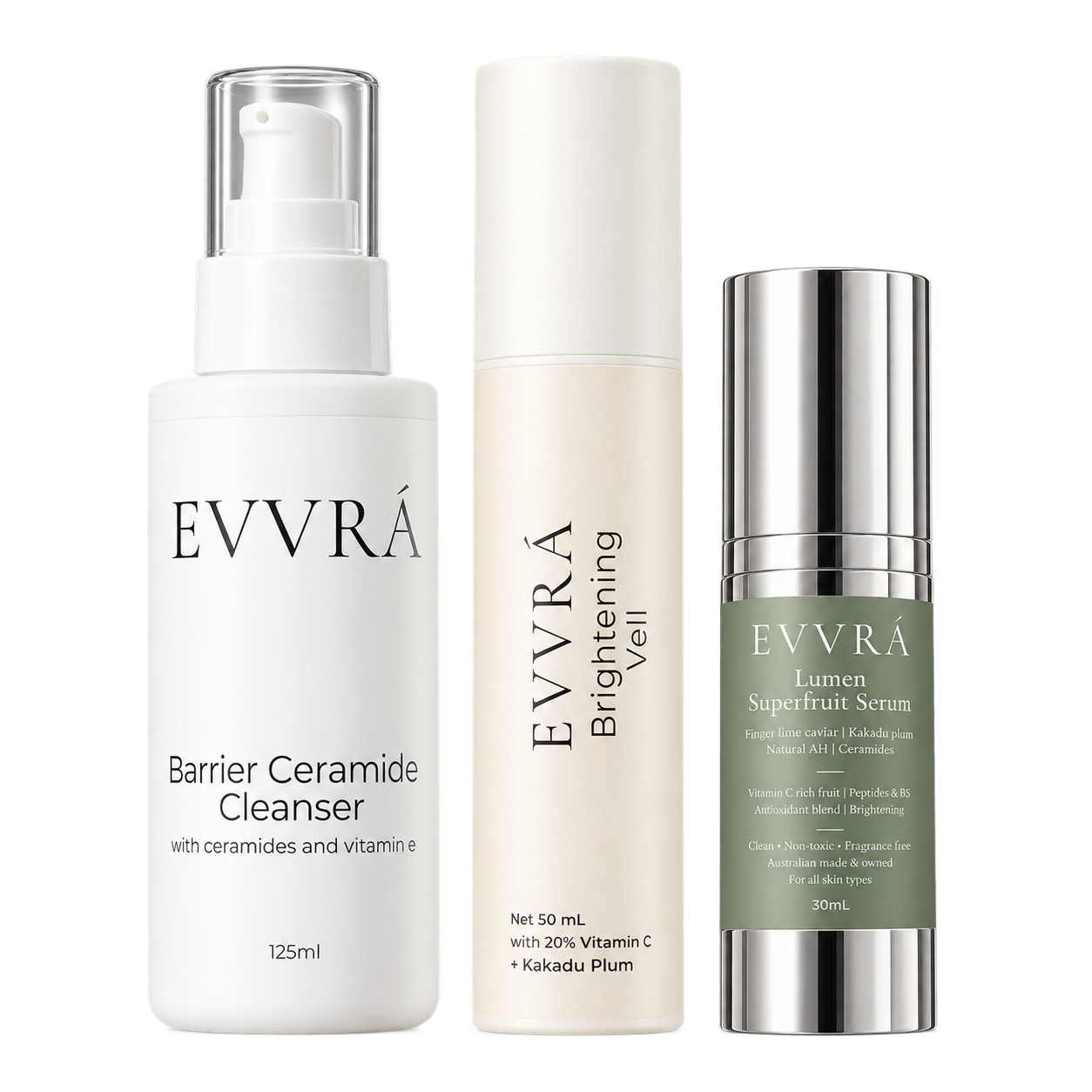
When you are ready to build your routine, explore our brightening collection or consider the Brightening Skincare Gift Set if you are putting a routine together for someone else.
Kakadu Plum Skincare Benefits and Where Natural Vitamin C Fits
Kakadu plum is an Australian native fruit that is a natural source of vitamin C. In skincare, it is often included as a botanical ingredient that complements other antioxidants in a formula. Our Brightening Veil pairs Kakadu plum with vitamin C to help even the look of skin tone.
Natural ingredients are not a substitute for a well-formulated product, but they can be a meaningful part of one. If you value Australian botanicals, look for formulas that clearly state where their key ingredients come from and how they are used.
How to Layer Vitamin C and SPF Each Morning
Vitamin C works best as part of a morning routine that includes daily sun protection. Cleanse, apply your vitamin C product to the face and neck, then finish with a broad-spectrum SPF. Sunscreen is recommended every day, not only on sunny days.

For the Brightening Veil, smooth a generous layer over the face and neck after any serum, then apply your SPF as the final step. Allow each layer a moment to settle before applying the next. If your skin is sensitive, start with a small amount and build up gradually.
A Simple Skincare Routine for Dull Skin, AM and PM
Morning: Gently cleanse, apply a vitamin C product such as Brightening Veil - Vitamin C Moisturiser 50ml, and finish with SPF.
Evening: Cleanse again, then use a hydrating serum or moisturiser suited to your skin type. If you use retinoids, introduce them slowly, avoid them if you are pregnant or breastfeeding, and check with your GP or dermatologist first.
Introduce one change at a time so you can see how your skin responds. Follow a step-by-step routine for evening out skin tone if your concern is uneven colour. Browse serums that sit alongside a vitamin C moisturiser to build the rest of your routine. Patch test any new product on a small area of skin for several days before using it across your face.
Your Next Step: Patch Test, Then Choose Your Moisturiser
Before you commit to any vitamin C moisturiser, patch test it on a small area of skin for a few days. Watch for redness, stinging or itching, and stop using the product if you notice any reaction. If you have persistent or painful skin concerns, speak with your GP or a dermatologist before trying new actives.
Once you know the product suits you, make it part of your daily routine. Shop our vitamin C moisturiser or explore our vitamin C serum for uneven skin tone if you want a lighter option to layer alongside it. Our team at EVVRÁ is happy to help you think through which format fits your routine.
Frequently Asked Questions
What should I look for in a vitamin C moisturiser?
Look at the form of vitamin C listed, how the product is packaged, and whether it is designed to sit under daily SPF. Packaging that limits light and air exposure helps protect vitamin C from breaking down over time. EVVRÁ's Brightening Veil (/products/brightening-veil) is an Australian-made vitamin C moisturiser with Kakadu plum, ferulic acid and green tea, designed for use each morning before SPF. Always patch test a new product on your jaw or inner arm for a few days before using it across your face.
Is it better to use vitamin C in the morning or at night?
Most people use vitamin C in the morning, because it fits neatly under sunscreen as part of a daytime routine. Morning use pairs well with SPF. Night is a good time for retinoids rather than vitamin C, and retinoids are not recommended during pregnancy or breastfeeding. If your skin is sensitive, start with a few mornings a week and build up gradually.
Can I use vitamin C moisturiser with SPF?
Yes. Apply your vitamin C moisturiser, allow it to settle for a minute or two, then finish with a broad-spectrum SPF every morning, including on cloudy days. Sunscreen is the step that protects your skin from UV exposure, which is significant across Australia. A vitamin C moisturiser supports the look of an even, luminous complexion but does not replace daily sun protection. Patch test any new product first, especially if your skin reacts easily.
What are the benefits of Kakadu plum in skincare?
Kakadu plum is an Australian native fruit that is naturally rich in vitamin C, making it a botanical source of the nutrient in skincare formulas. In EVVRÁ's Brightening Veil, Kakadu plum works alongside ferulic acid and green tea to help brighten and even the look of skin tone and to support antioxidant protection. Results vary by skin type and routine, and these products help support the look of radiance rather than treating any skin condition. Patch test before regular use.
