

Is Australian Cruelty-Free Skincare Worth the Switch?
Last Updated: November 2, 2026
Quick Summary
The best Australian cruelty-free skincare pairs a clear no-animal-testing policy with local formulation and full ingredient transparency. Look for brands like EVVRÁ that are Australian made, disclose their actives and build simple routines for sensitive or mature skin. Certification such as Leaping Bunny adds independent proof, and because Australia has no mandatory scheme, it's worth asking any brand how it backs its claim.
- Australia has no mandatory certification scheme for cruelty-free claims.
- Leaping Bunny is the most rigorous standard because it audits the entire supply chain.
- A product can be vegan without being cruelty-free, and cruelty-free without being vegan.
- Scan for lanolin, beeswax, carmine and honey, the usual reasons a product fails a vegan check.
- Introduce retinal slowly, two nights a week, and patch test new products for three nights.
Table of Contents
- What Cruelty-Free Really Means in Australian Skincare
- How We Chose the Best Australian Cruelty-Free Skincare Brands
- Australian Cruelty-Free Skincare Brands Worth Knowing
- Vegan Skincare Australia: What to Check Before You Buy
- Cruelty-Free Skincare for Sensitive Skin: What to Look For
- Building Your Cruelty-Free Routine with EVVRÁ
- Frequently Asked Questions
What Cruelty-Free Really Means in Australian Skincare
The best Australian cruelty free skincare starts with understanding what the label actually promises. Cruelty-free means no animal testing was conducted on the finished product or its ingredients, either by the brand or by third parties acting on its behalf. That definition sounds simple. In practice, the claims are messier than most shoppers expect.
The confusion is understandable. Australia has no mandatory certification scheme for the phrase, so it pays to look a little deeper than the box. Independent certification is the strongest form of proof, and a clear, specific policy from the brand itself is the next best thing.
Here's the distinction most guides skip: a product can be cruelty-free without being vegan, and vegan without being cruelty-free. They are separate questions, tested separately.
Cruelty-free vs vegan vs natural vs organic
- Cruelty-free: no animal testing at any stage, including ingredient suppliers.
- Vegan: no animal-derived ingredients such as beeswax, lanolin, carmine or honey.
- Natural: ingredients sourced from nature, though the term is largely unregulated.
- Organic: grown and processed under a certified agricultural standard, with paperwork to prove it.
A formula can be vegan and still tested on animals. It can be natural and packed with animal by-products. Treat each claim as its own checkbox rather than one ethical seal.
How to verify a brand's claims
Ask three questions before you trust a label. How is the claim backed? Does it cover ingredients or only the finished product? And who owns the brand?
The Leaping Bunny programme run by Cruelty Free International is the most rigorous global standard because it audits the entire supply chain, not just the final mixing tank. PETA's Beauty Without Bunnies database is a useful cross-check, though it relies more heavily on signed assurances than site audits.
Watch out: parent companies matter. A small cruelty-free label bought by a conglomerate that still tests elsewhere can leave shoppers feeling misled. Check the corporate ownership, not just the badge on the bottle.
How We Chose the Best Australian Cruelty-Free Skincare Brands
| Criterion | What We Check | Why It Matters |
|---|---|---|
| Cruelty-free policy | A clear no-testing policy, or certification such as Leaping Bunny | Shows how the claim is backed |
| Local making | Australian formulation or manufacture | Shorter, more traceable supply chain |
| Transparency | Full ingredient lists, disclosed actives | Lets you screen for irritants |
| Skin suitability | Sensitive and mature skin testing | Matches product to real concerns |
| Value | Size, concentration, routine simplicity | Fewer, better products |
Australian Cruelty-Free Skincare Brands Worth Knowing
EVVRÁ is Australian made, cruelty-free, and formulated without sulphates or parabens, pairing science-backed actives like peptides, ceramides and retinal with Australian botanicals. The range is built for evolving skin: hydration, radiance, firmness and barrier support.
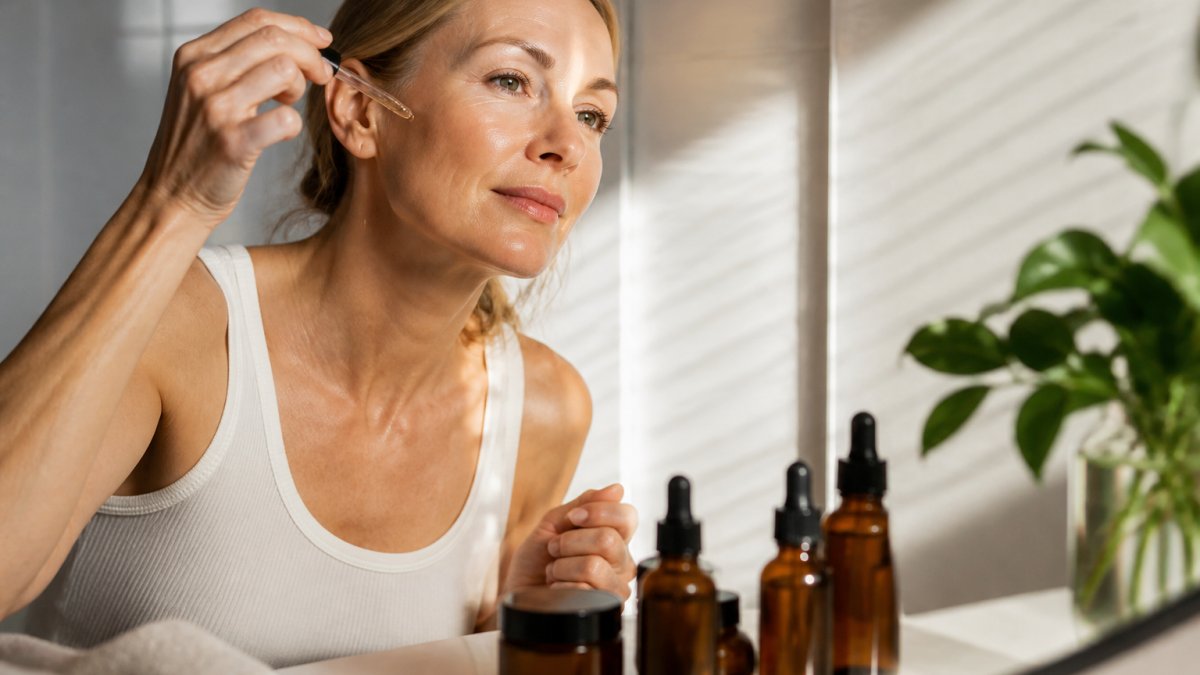
Best for: women navigating menopause, perimenopause or postpartum skin changes who want a simple, effective routine. Skip if: you prefer a ten-step routine or want the cheapest possible option.
How to build a shortlist in four passes
- Pass one, cruelty-free policy. Look for a clear statement that neither finished products nor ingredients are tested on animals, or a named certification. This quickly removes brands relying on vague claims.
- Pass two, ingredient transparency. Open the product page and look for a full INCI list. If it is missing, move on. This single filter eliminates most of the noise.
- Pass three, skin-type fit. Match the product to your concern rather than to the brand's hero marketing. A barrier-repair moisturiser and a resurfacing acid serve different skins.
- Pass four, value. Compare price per millilitre rather than sticker price, and factor in how many steps the product replaces. A $70 AUD serum that replaces three products can be better value than a $30 AUD one that does not.
Categories worth searching within
- Barrier and sensitive-skin ranges. Look for ceramides, cholesterol and fatty acids listed near the top of the INCI. These are the ingredients that rebuild a compromised barrier, and brands that formulate for sensitivity usually disclose them clearly.
- Active-led ranges. Retinal, peptides and vitamin C are the actives most local cruelty-free brands build around. Check the concentration is disclosed or at least the form is named, "retinaldehyde" tells you more than "retinol complex".
- Oil and balm cleansers. These suit dry and mature skin and are usually simple formulas, which makes them easy to verify ingredient by ingredient.
- Mineral SPF. Sunscreen is the category where Australian regulation is strictest, and cruelty-free options exist, but check the brand's policy covers the SPF line specifically, it is sometimes excluded.
Best for: shoppers who want to compare a few transparent local options without relying on a list that goes stale. Skip if: a brand hides behind a generic "we love animals" statement with no clear policy.
Vegan Skincare Australia: What to Check Before You Buy
Vegan skincare Australia shoppers should scan for four common animal-derived ingredients: lanolin, beeswax, carmine and honey. These appear in plenty of otherwise "clean" formulas, and they are the usual reason a cruelty-free product fails a vegan check.
Read the INCI list rather than the front label. Lanolin hides in rich moisturisers, carmine turns blushes pink, and beeswax thickens balms. If a brand claims vegan status, it should state that no animal by-products appear anywhere in the formula, including minor ingredients.
Vegan and cruelty-free are complementary, not interchangeable. A product can be both, and the strongest Australian options usually are. Ask the brand directly how each claim is backed, and check that the answer covers ingredients as well as finished products.
Cruelty-Free Skincare for Sensitive Skin: What to Look For
Cruelty-free skincare for sensitive skin needs more than an ethical badge. The formula has to be gentle, and that means fewer irritants, not just fewer animal tests.
Look for ceramides and peptides, which support the barrier without stinging. Introduce retinal slowly, two nights a week to start, and buffer with a moisturiser if your skin reacts. Fragrance and essential oils are common triggers, so patch test anything new on the inner forearm for three nights.
A compromised barrier can react to many ingredients, including botanicals. If your skin is reactive, consider building a routine around gentle cleansing and barrier support.
Building Your Cruelty-Free Routine with EVVRÁ
EVVRÁ's approach pairs peptides, ceramides and retinal with Australian botanicals, so the actives do the work while the barrier stays supported. For sensitive skin, start with the Barrier Ceramide Cleanser and Cloud Barrier Cream. For firmness, add the Lift Peptide Serum. Or choose your own cleanser, serum and moisturiser with the Build Your Own Skincare Kit.
Watch out: switching your entire routine at once makes it impossible to tell what is working. Change one product at a time, give it a fortnight, then reassess.
Frequently Asked Questions
Is Australian-made skincare automatically cruelty-free?
No. Made in Australia refers to where a product is manufactured, not how it was tested. A brand can manufacture locally and still sell in markets that require animal testing, or source ingredients tested on animals. Look for a clear cruelty-free policy or a named certification such as Leaping Bunny, and check that the policy covers ingredients as well as finished products. If anything is unclear, ask the brand directly how it backs the claim.
What is the difference between cruelty-free and vegan skincare?
Cruelty-free refers to testing: no animal testing at any stage, for ingredients or finished products. Vegan refers to ingredients: no animal-derived components such as beeswax, lanolin, carmine or honey. A product can be cruelty-free but not vegan, or vegan but made by a brand that still tests on animals elsewhere. For a fully ethical pick, look for both claims, each backed by a clear policy rather than just a logo on the box.
How can I check whether a skincare brand is cruelty-free?
Start with the brand's own policy: it should clearly state that neither finished products nor ingredients are tested on animals. Certification such as Leaping Bunny or PETA adds independent proof, and both publish brand directories you can search. Then check the parent company, since a cruelty-free brand owned by a larger group may still sell in markets that mandate animal testing. If the wording is vague, email the brand. A brand that answers clearly is usually the one telling the truth.
Which cruelty-free skincare is best for sensitive skin?
Look for fragrance-free or low-fragrance formulas, a short ingredient list, and barrier-supporting ingredients such as ceramides and peptides rather than strong acids or high-strength retinoids. Introduce one active at a time and patch test on the inner arm for a few days. A cruelty-free claim tells you about animal testing, not tolerance, so check the formulation separately. If your barrier is reactive, start with a gentle cleanser and moisturiser before adding anything else.
The challenge with cruelty-free skincare is not finding products. It is finding brands that are clear about their claims, with formulas that suit skin as it changes. EVVRÁ is built for both: Australian made, cruelty-free, free from sulphates and parabens, and built around science-backed actives for evolving skin. Start shopping with EVVRÁ and build a routine that supports hydration, radiance and a healthy barrier.
