

What Is the Best Hydrating Serum for Your Skin?
Last Updated: November 9, 2026
Quick Summary
The best hydrating serum matches what your skin is actually doing: Cloud Hydra Gel suits dehydrated, tight-feeling skin, PDRN DNA Recovery Serum suits sensitive skin, and Lift Peptide Serum suits dry, mature skin. Apply your hydrating serum to damp skin, then seal it with moisturiser and daily SPF.
- A hydrating serum adds water, while a moisturiser helps seal that water in.
- Apply hyaluronic acid serums to slightly damp skin so they have water to draw in.
- Layer products thinnest to thickest, water before oil, and finish with SPF every morning.
- Use exfoliating acids on clean, dry skin first, then follow with your hydrating serum.
- In cold weather, pair your humectant serum with a barrier-supporting cream to reduce water loss.
Table of Contents
- Which Hydrating Serum Suits Your Skin?
- How We Chose These Serums
- The Best Hydrating Serums, Compared
- Choosing a Serum for Dehydrated Skin
- How to Layer Skincare Products for Lasting Hydration
- Ingredients That Make a Hydrating Serum Work
- Start Your Hydration Routine
- Frequently Asked Questions
Which Hydrating Serum Suits Your Skin?
A hydrating serum is a lightweight, water-based formula built around humectants that draw moisture into the skin. The best one matches what your skin is actually doing, not what a label promises. At EVVRÁ, we formulate for skin that shifts with age and hormones.
Below, we break down four serums by concern, explain how to layer them, and show you exactly how to choose.
How We Chose These Serums
Every pick here is Australian made, cruelty-free and free from parabens and mineral oil.
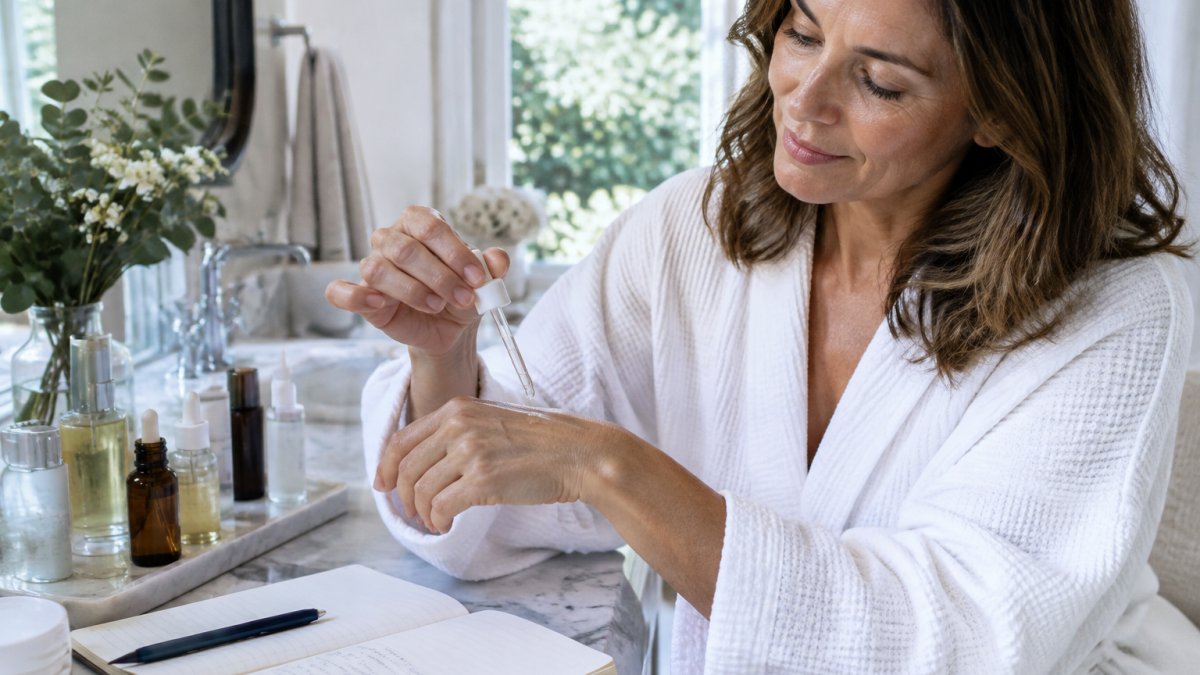
Our criteria: an ingredient list that justifies the hydration claim with humectants and barrier support rather than water and fragrance; a texture that sits comfortably under sunscreen in summer and a richer cream in winter; and a formula that suits compromised skin.
A hydrating serum is not a moisturiser. It adds water; a moisturiser helps seal it in.
The Best Hydrating Serums, Compared
| Serum | Best For | Key Ingredients | Size |
|---|---|---|---|
| Cloud Hydra Gel | Dehydrated, tight-feeling skin | Hyaluronic acid, PGA | 50ml |
| PDRN DNA Recovery Serum | Sensitive, stressed skin | Salmon PDRN, copper peptide, Kakadu plum | 30ml |
| Lift Peptide Serum | Dry, mature skin | Matrixyl 3000, peptide complex, centella | 30ml |
| Superfruit Serum | Dull, rough texture | Finger lime, Kakadu plum, ceramides, marula oil | 30ml |
Size
Cloud Hydra Gel: Best Overall for Dehydration
If your skin feels tight after cleansing but turns shiny by lunchtime, this is your pick.
Smooth a small amount over clean, slightly damp skin morning and evening, then follow with moisturiser. You can shop the Cloud Hydra Gel to see the full formula.

Best for: dehydrated skin that needs water, not oil. Skip if: your skin is genuinely dry and needs lipids rather than humectants.
PDRN DNA Recovery Serum: Best Hydrating Serum for Sensitive Skin
Reactive skin needs calm before it needs plumping. This restorative serum uses salmon PDRN and copper peptide to support skin that feels stressed or depleted, with Kakadu plum and resveratrol for antioxidant support.
Apply two to three drops to clean skin before moisturiser. Patch test first, and if your barrier is severely compromised, see a GP or dermatologist before adding new actives. You can view the PDRN DNA Recovery Serum for the full ingredient list.

Best for: sensitive, stressed or mature skin, and skin recovering after treatments. Skip if: you want a lightweight gel texture for daytime layering.
Lift Peptide Serum: Best Serum for Dry Skin
Dry skin loses both water and oil, so it needs a serum that supports firmness while you seal in moisture.
Use two to three drops morning and evening before moisturiser. Follow with daily SPF in the morning. You can explore the Lift Peptide Serum to check the details.

Best for: dry, mature skin with fine lines. Skip if: your main concern is congestion rather than firmness.
Superfruit Serum: Best for Dull, Rough Texture
Texture and dullness can be linked to the look of uneven surface skin. Superfruit Serum uses finger lime caviar to refine the look of texture, Kakadu plum for radiance, and ceramides with marula oil to keep skin comfortable.
Press two to three drops into clean skin before moisturiser, and follow with SPF during the day. You can see the Superfruit Serum for the full details.
Best for: dull, uneven or rough-textured skin. Skip if: your skin is acutely sensitised right now.
Choosing a Serum for Dehydrated Skin
Dehydration is a water problem, not an oil problem. Skin can be oily and dehydrated at once. If it feels tight after cleansing or looks dull by mid-afternoon, it may be dehydrated rather than dry.
A serum for dehydrated skin should lead with humectants. Look for hyaluronic acid, glycerin and PGA near the top of the list.
Hyaluronic acid is generally best applied to slightly damp skin, because it needs water to draw in.
How to Layer Skincare Products for Lasting Hydration
Order matters: thinnest to thickest, water before oil. A simple routine, applied in the right sequence, is easier to keep up.
- Cleanse with a gentle, non-stripping cleanser such as the Barrier Ceramide Cleanser.
- Mist or pat skin damp.
- Apply your hydrating serum while skin is still damp.
- Follow with a moisturiser to seal in the water.
- Finish with SPF every morning.
If you are layering more than one serum, put the water-based one first. Our guide on how to build your own skincare routine covers the order step by step.
Watch out: applying serum to bone-dry skin and skipping moisturiser can leave the serum feeling less effective.
How hydrating serums fit alongside retinoids, acids and vitamin C
A hydrating serum is the most compatible step in any routine, it layers under almost everything, but the order and timing around actives still matter.
With retinoids. Apply your hydrating serum first on damp skin, then moisturiser, then a pea-sized amount of retinoid, or buffer by mixing a drop of moisturiser with the retinoid. Our Renewal Veil is a triple vitamin A night cream for those already comfortable with retinoids.
With exfoliating acids (AHA/BHA). Use the acid on clean, dry skin first, wait a few minutes, then apply your hydrating serum and moisturiser to offset the tightness acids can leave.
With vitamin C. Vitamin C serums are often water-based, so apply them first, then your hydrating serum, then moisturiser. A vitamin C moisturiser such as Brightening Veil is an easier entry point if a dedicated serum feels too active.
With niacinamide. Niacinamide layers comfortably with humectants and peptides; concerns about niacinamide and vitamin C cancelling each other out are generally considered overstated at cosmetic concentrations.
Adjusting the same routine for humidity, cold and indoor heating
A routine that feels perfect in a humid summer can feel tight in a heated office in July. The serum does not need to change as much as the layers around it do.
- High humidity and heat: humectants draw plenty of water from the air, so a lightweight gel such as Cloud Hydra Gel is often enough, sealed with a light lotion. Heavy occlusives can feel suffocating and contribute to congestion.
- Cold, windy weather: low humidity pulls water out of the skin, so pair your humectant serum with a barrier-supporting cream such as Cloud Barrier Cream to reduce water loss.
- Indoor heating and air conditioning: both dry the air. A hydrating serum applied to damp skin, followed by a cream, and a humidifier in the room where you sleep, is a common pattern that helps.
Watch out: in very dry conditions, a hyaluronic acid serum applied to dry skin with no moisturiser on top may leave skin feeling tighter rather than plumper.
Ingredients That Make a Hydrating Serum Work
A hydrating serum earns its place through its humectants. Everything else, peptides, antioxidants, soothing botanicals, is a supporting act. Knowing what each ingredient does, and what it cannot do, helps you read a label instead of a marketing line.
The humectants that do the hydrating
Hyaluronic acid is a humectant that can hold many times its weight in water, which is why it can give an instant plumped look.
Glycerin is a humectant commonly used in skincare to draw water into the upper layers of the skin.
PGA (polyglutamic acid) is a humectant that forms a film on the surface, and is often paired with hyaluronic acid.
Panthenol (provitamin B5) and sodium PCA are additional humectants that also help comfort reactive skin.
The supporting players: barrier lipids and soothing actives
Ceramides are lipids that make up part of the skin barrier and help the skin hold onto moisture. If your skin is flaky, rough or reactive, ceramides are the ingredient to look for alongside humectants.
Peptides support firmer, smoother-looking skin over time. They are not hydrators, but they layer well with humectants and suit mature skin.
Niacinamide is an ingredient often used to support the look of even tone. Centella asiatica soothes and comforts reactive skin. Kakadu plum and finger lime are Australian botanicals rich in vitamin C and antioxidants, used for radiance and antioxidant support rather than hydration itself.
Humectant, emollient, occlusive: why the distinction matters
Humectants attract water, emollients soften and smooth, and occlusives seal water in. A hydrating serum is mostly humectant, which is why it needs a moisturiser on top, the serum adds water, the moisturiser keeps it there. Hydration refers to water content, while moisturisation generally involves water plus an emollient or occlusive sealing it in.
What hydration claims can and cannot tell you
"Instantly plumped" and "24-hour hydration" are different claims. The first describes how skin feels minutes after application, a real but short-lived effect.
Watch out: a long ingredient list is not a sign of a better serum. A short formula built around two or three well-chosen humectants, with ceramides or peptides if your skin needs them, often layers more predictably than a crowded one.
Start Your Hydration Routine
The challenge with hydration is consistency. Skin does not respond to one good week; it responds to a routine you can actually keep, through summer humidity and winter heating alike.
Our serums are Australian made, cruelty-free and formulated without parabens, sulphates or mineral oil. They are designed to layer simply alongside your routine. Free shipping applies on orders over $100.
Explore EVVRÁ's hydrating serums to find one that suits your skin.
Frequently Asked Questions
What is the best hydrating serum for dry skin?
Dry skin lacks oil as well as water, so look for a hydrating serum that also supports the barrier. EVVRÁ's Lift Peptide Serum pairs peptides with centella and Kakadu plum, and layers well under a richer moisturiser such as Cloud Barrier Cream. Apply it morning and evening to clean, slightly damp skin, then seal it in with moisturiser. If dryness is persistent or flaky, see a GP or dermatologist to rule out other causes.
What is the difference between dry and dehydrated skin?
Dry skin is a skin type that produces less oil, while dehydrated skin is a temporary state caused by a lack of water. Dehydrated skin can feel tight and look dull even if you have an oily T-zone. A serum for dehydrated skin, such as Cloud Hydra Gel with hyaluronic acid and PGA, helps draw in and hold moisture. Dry skin usually needs both hydration and an emollient moisturiser to lock it in.
Should I use a hydrating serum before or after moisturiser?
Apply your hydrating serum before moisturiser. Serums are lightweight and absorb quickly, so they sit closest to the skin, while moisturiser forms a layer on top that helps hold the moisture in. A simple order is cleanser, mist or damp skin, serum, moisturiser, then SPF in the morning. If you use a retinoid at night, apply it after your serum and before moisturiser, and patch test first.
Can you use a hydrating serum with retinol?
Yes, a hydrating serum can sit alongside retinol in a routine. Apply the serum first, then the retinoid, then moisturiser to cushion the skin. Start with retinoids two or three nights a week and patch test first. Retinoids are not recommended during pregnancy or breastfeeding. If your skin becomes very red, painful or persistently irritated, stop and speak to a GP or dermatologist.
How long does it take to notice a difference from a hydrating serum?
Skin responds differently to every routine, so it is best to judge a hydrating serum over several weeks of consistent use. Results depend on your skin type, the formula and how well you seal it in with moisturiser. Use it morning and evening, apply to slightly damp skin, and wear daily SPF. If nothing changes after several weeks, review the rest of your routine.
